
KIDS & ADULTS GRADING SYSTEM

KIDS GRADING SYSTEM
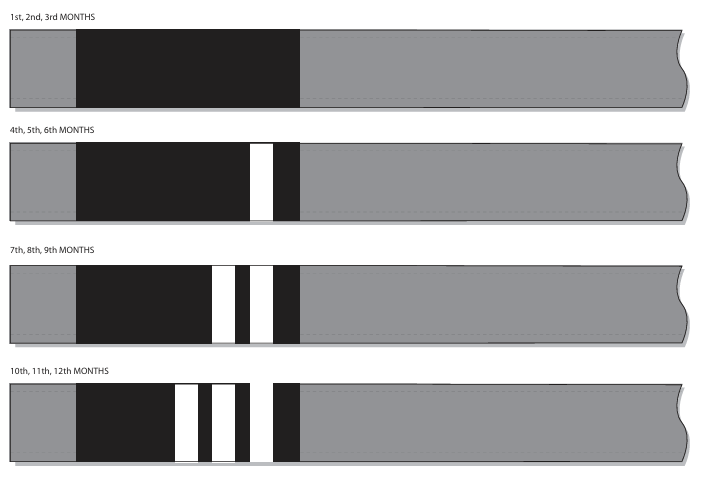
Stripes
Kids are awarded stripes as encouragement to continue training and developing their skills in the art. As they grow on and off the Mat they will be graded their stripes. After they receive 3 stripes their next grading will be a change in belt colour.
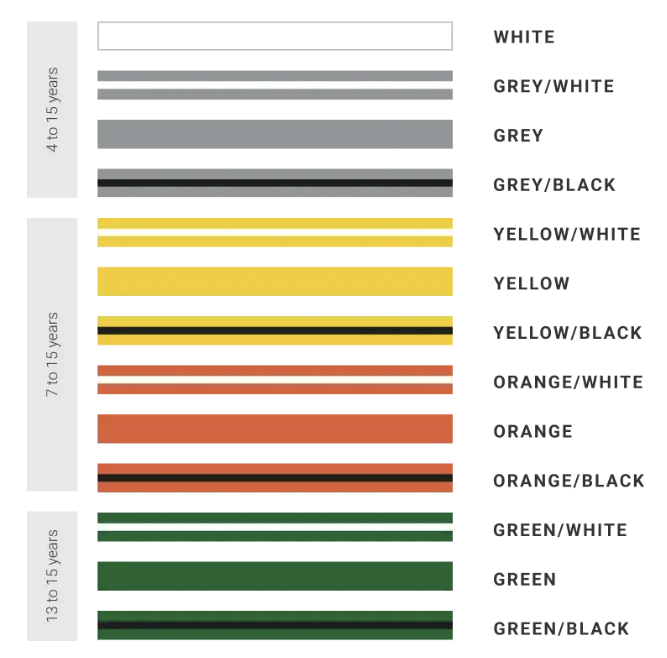
Kids Coloured Belts
When your child grades to their first or next belt it is an indicator that they’re learning and developing a higher level of Brazilian Jiu Jitsu and self defence.
A change in belt can only be achieved through gaining 3 stripes.
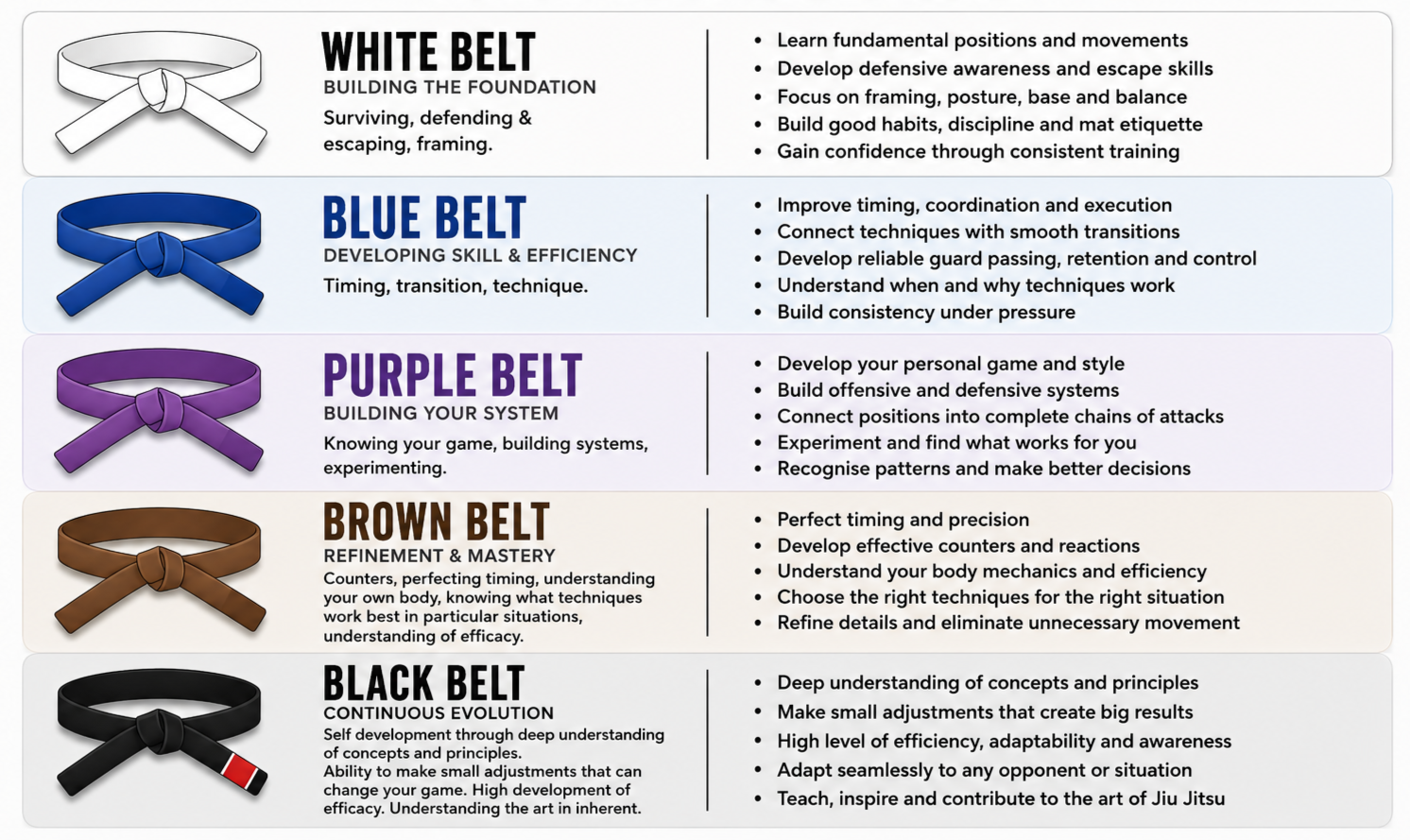
ADULT GRADING SYSTEM
At DC Jiu Jitsu, belt promotions are earned not given. We believe that a belt should represent a student's genuine ability to apply Jiu Jitsu under live resistance, while also reflecting their commitment, attitude and contribution to the academy.
Unlike systems that rely solely on time served or memorising techniques, our grading methodology evaluates the complete practitioner.
A belt is not simply recognition of what you know it is recognition of how well you can apply your knowledge under pressure, how you conduct yourself on and off the mats, and how you continue to grow as both a martial artist and a person.
At DC Jiu Jitsu, our goal is to produce technically skilled, thoughtful and respectful practitioners who embody the true spirit of Brazilian Jiu Jitsu.
At DC Jiu Jitsu, our Kids Grading System follows the framework established by the International Brazilian Jiu-Jitsu Federation while maintaining a strong focus on technical development, character, consistency, and the traditions of Brazilian Jiu Jitsu.
Our grading system is designed to reward progress over time, encourage long term participation, and provide clear goals for students at every stage of their journey.
Promotion decisions are based on a combination of factors including:
Technical Knowledge
Students should demonstrate an understanding of the techniques and concepts appropriate to their age and belt level.
Application
Students should be able to apply techniques during drills, positional training, and live sparring.
Attendance and Consistency
Regular participation is essential for skill development and progression.
Attitude and Behaviour
Respect for coaches, training partners, parents, and academy rules is expected at all times.
Effort and Improvement
Promotions are awarded based on individual growth and commitment rather than simply winning matches or comparing students to others.
Sportsmanship
Students are encouraged to display humility, discipline, teamwork, and respect both on and off the mats.